The Convergence Is Geographic: Why AI's Whole Stack Is Landing in Northern Nevada
For a while the inbound had two shapes. One was find me power — an operator with racks on order and no megawatts to run them, the story we told in Bring Your Own Power and Time-to-Energized. The other was find me compute — a team with power lined up and a spec sheet they'd screenshotted off a keynote, the conversation behind the H100 cliff and which GPU to buy in 2026. Two desks, two questions, and — as we kept arguing — one decision.
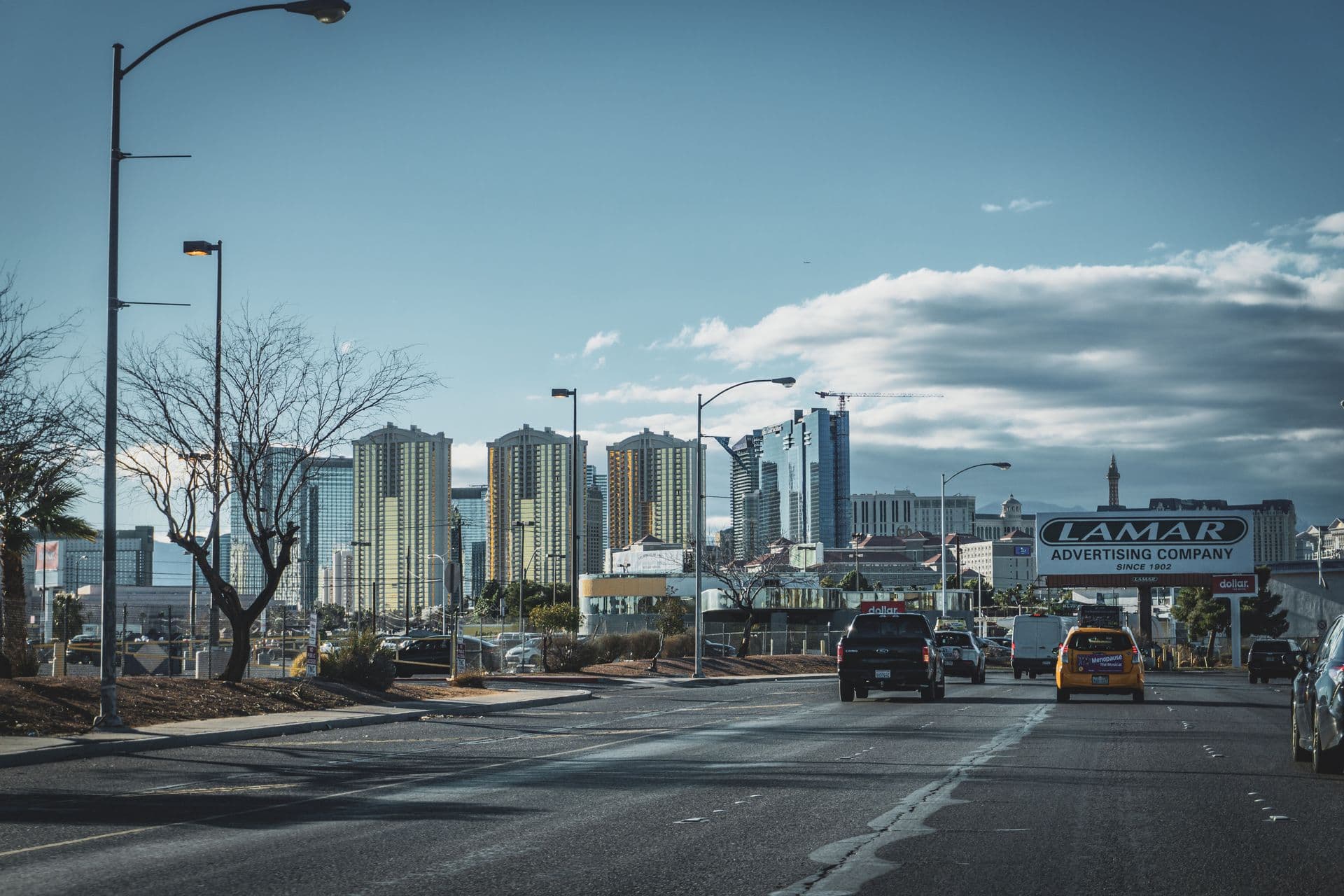
Lately there's a third shape, and it's the one worth writing down. It isn't a new question. It's the same operators, plus a second kind of operator entirely — robotics teams, power-electronics shops, energy-hardware startups, advanced-manufacturing lines — all asking their version of find me power and compute and a place to build the thing, and all of them, independently, pointing at the same patch of high desert. The convergence everyone narrates on a slide, we've started watching as a shipping address. The thesis of this post is simple and, I think, underpriced: the convergence of energy, AI, and hardware is not a category. It's a geography. And right now the geography is Northern Nevada.
Convergence isn't a sector — it's an intersection of inputs
Strip the buzzwords off and the "energy × AI × hardware" story is really a claim about three inputs that used to live in different places and now have to live in one.
- Firm power, cheap and soon. Not a gigawatt someday — 10 to 100 megawatts you can energize inside a build cycle.
- Compute you can actually cool and feed. The silicon is the easy part; the facility is where buildouts die.
- Physical room to fabricate and test. Robots, drones, power hardware, and manufacturing lines need shop space, acreage, and a permitting regime that says yes this year.
Any one of these you can find in a lot of places. The rare thing — the thing that makes a place instead of a sector — is all three cheap and fast at once. That's what forces the co-location. A robotics team that has to drive two states to reach cheap power, then two more to reach a fab, then negotiate a five-year interconnection queue for a test facility, isn't converging anything; it's commuting. The convergence only happens where the inputs are already stacked on top of each other. There are very few such places. Northern Nevada is the clearest one, and the deal flow is starting to prove it.
The power leg is already here
We've made the power argument at length, so I'll compress it. The binding constraint on AI infrastructure is no longer chips or even megawatts in the abstract — it's time-to-energized, the months between deciding to build and having real load running. Both default paths to firm power are jammed: U.S. interconnection queues run past four to five years with a roughly one-in-five completion rate (Berkeley Lab, Queued Up: 2025 Edition), and the "fast" alternative — a gas turbine behind your own meter — is a sold-out, multi-year-lead-time market from the three OEMs that make the big machines (Utility Dive, 2025). The full argument is in Time-to-Energized.
Nevada's answer is the part that matters for convergence. The state sits on one of the best geothermal resources in the country — the USGS has estimated enhanced geothermal in the Great Basin alone could eventually supply on the order of 10% of U.S. electricity (USGS, 2025) — and under existing Nevada law a genuinely self-sustained generator can serve its own load behind the meter without sitting in the utility queue at all. That's why the hyperscalers are signing here: Google's geothermal deals with Fervo and Ormat and Amazon's with Zanskar have made the state a national hub for clean-firm power. The load is real and it's local. By Desert Research Institute's read of NV Energy's own resource plan, data centers went from a rounding error to roughly a fifth of Nevada's electricity in 2024 and are pointed at a third of it by 2030. Whatever the exact number, the direction is not in dispute, and the utility has asked for billions in transmission to chase it. Cheap firm power isn't a promise in Nevada. It's a construction site.
The compute leg lands in the same building
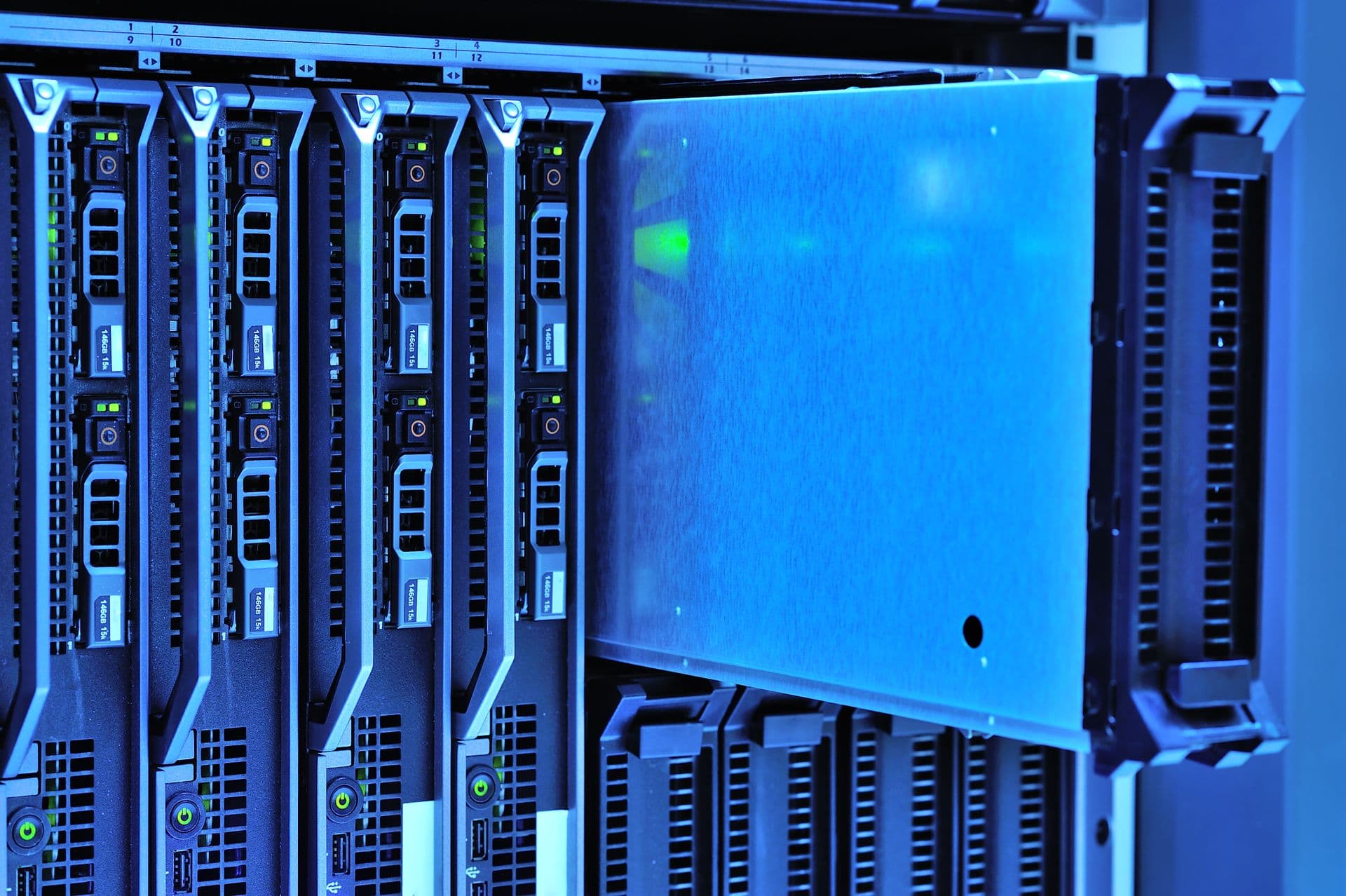
Power without compute is a substation with nothing to feed. The second leg is the accelerators, and here Nevada's advantage is quieter but real: it's downstream of the same decision. Once the power lands behind the meter, the racks follow, and the buyer faces the ladder we mapped in which GPU to buy in 2026 — Hopper H100/H200 down low, Blackwell B200 in the middle, Blackwell Ultra and the GB300 NVL72 rack at the frontier. The point I'd stress for the convergence story is the one most buyers still get wrong: the constraint on that ladder is what your facility can cool, not what NVIDIA can ship. Rack-scale Blackwell Ultra pushes power density into liquid-cooling territory and brings real facility requirements with it.
Which is exactly why compute and power can't be run on two desks. The cheapest fleet of GPUs is dead weight without megawatts behind it, and a perfectly-powered hall is empty without silicon that fits its cooling envelope. In Nevada the two legs are being poured into the same foundation — cheap firm electrons and a coolable hall, sized together. That co-design is the whole reason the compute lands here instead of following the power as an afterthought.
The third leg is the ground itself
Here's the part the pure power-and-compute story misses, and the reason this is a convergence post and not a fourth turbine post. Data centers are one load. They are not the only thing that wants cheap firm power, a permitting regime that says yes, and room to build — and Northern Nevada was a hardware place before it was an AI place.
The Tahoe-Reno Industrial Center out by the gigafactory is, at 107,000 acres, one of the largest industrial parks in the country, and its tenant list is a who's-who of physical AI's supply chain: Tesla's Gigafactory, Redwood Materials recycling and remaking batteries, Switch's data campus, Google, and a wave of newer data-center builds. The reason they're all there is a stack of structural advantages that has nothing to do with any one sector:
- Cheap industrial electrons. Nevada's industrial power runs well below California's — a gap the EIA's state price data has shown for years, and one NV Energy markets openly. For anyone training models, running test fleets, or building energy hardware, power price is a direct input cost, not a utility line item.
- No income tax and equipment-tax abatements. Nevada has no corporate or personal income tax, and its economic-development office abates sales-and-use tax on capital equipment down toward 2% — which is the difference between viable and not for anything capex-heavy. Hardware lives and dies on capital-equipment cost.
- Permitting as a feature. Storey County's pre-approval regime is what let Tesla go from dirt to production at the Gigafactory in roughly 18 months. For a physical-hardware team, the scarce resource is often not money — it's a jurisdiction that will let you build this year.
Cheap power pulls data centers. Cheap power plus cheap capital-equipment tax plus fast permitting plus an existing industrial base pulls the whole stack — the robots, the power electronics, the batteries, the manufacturing. That's the third leg: not a load to serve, but a place to make things. And it's already load-bearing.
Why the legs reinforce each other
The reason to care that all three are in one place — instead of merely noting that they are — is that each leg is the others' customer. This is the part that turns a cluster into a compounding system:
- Robotics needs cheap power and batteries. A fleet that learns on GPUs and runs on electrons is an energy problem wearing an AI costume (the argument in full).
- Data centers increasingly need robotics. Automated operations, physical maintenance, and construction robotics are becoming part of how large halls get built and run.
- Energy infrastructure needs AI software. Grid optimization, predictive maintenance, and digital twins are the software layer that makes the geothermal well and the microgrid actually dispatch — and that software can only be built well next to real industrial customers to sell to and learn from.
- Industrial software needs the customers. The unglamorous fourth beat: the modeling, simulation, and optimization tools that run all of the above are worthless in the abstract and valuable in-county, where the operator you're optimizing for is thirty minutes away.
The robotics team's power-electronics problem is the energy team's product. The data-center operator's automation problem is the robotics team's pilot. None of that cross-pollination happens over Zoom across three time zones; it happens when the companies share a grid, a county, and a customer base. Concentration isn't a side effect of the convergence. It is the convergence.
What we're seeing, and where we sit
We source the two legs at the core of this — the power and the compute, and increasingly the harder middle of connecting a site to generation that isn't on anyone's grid. So we see the inbound before it shows up in a market report, and the shape of it has changed. It used to be operators sizing a single data center. Now it's operators sizing a site — power, cooling, compute, and, more and more, shop space and test acreage in the same breath, because they've figured out that the thing they're building is a physical business and it wants to be born where physical businesses are cheap to build.
We don't own megawatts and we don't set the market — nobody hands those out. What we can do is read the deal flow honestly and connect a serious project to the people who move in this specific geography: the developers who know which geothermal leases are coming up and where the heat actually is, the integrators who can spec a coolable hall, the OEM channels for the iron that bridges the gap. The operators who plant here in the next twelve to twenty-four months — before the grid loosens later this decade and before the lease map gets picked over — are going to look, in hindsight, like they saw a trend. What they actually saw was a place.
If you're sizing something real and it has more than one leg — power and compute, or compute and a physical footprint — that's not two procurements. It's one, and it has an address. Talk to us, or browse the stack we put around projects like this. The power, compute, and time halves are where the specifics live.
Pantheon Research is our series on the infrastructure behind AI: power, turbines, cooling, compute, and the procurement reality that decides who actually ships. Field notes from the deal flow, not the keynote.
Milo
Expert in manufacturing technology and industrial solutions, sharing insights on the latest trends and best practices.