Industrial AI Software Runs Next to the Iron: The One AI Layer You Can't Build Remotely
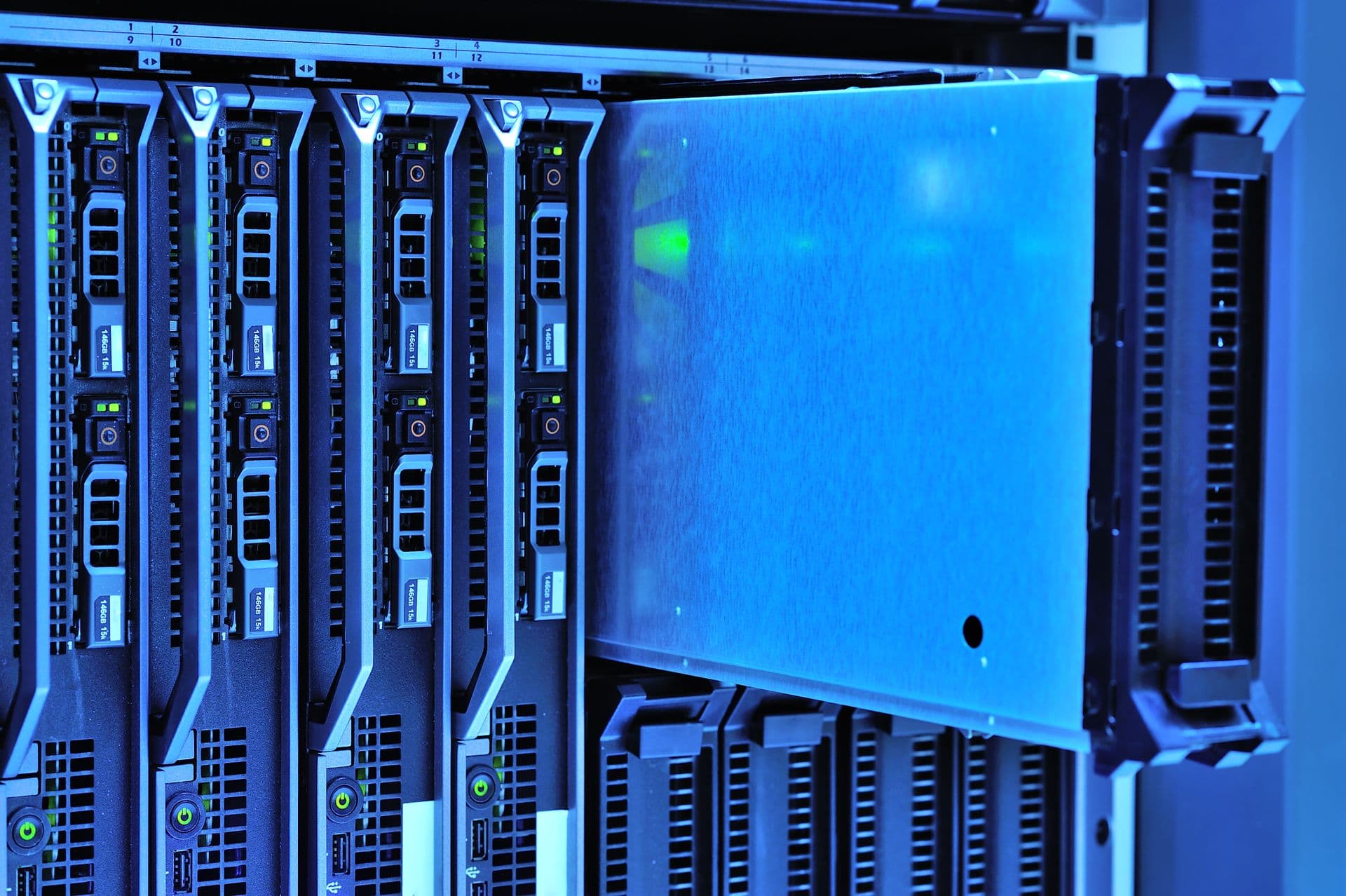
We don't deal in software. We source the physical layer — the turbines, the GPUs, the switchgear and transformers, the iron that bridges the gap between a site and the power it needs. So this is a field note from an unusual vantage: not the vendor selling the software, but the desk that ships the assets the software runs on. And from that desk, the same thing keeps happening. An operator lands the power, racks the compute, energizes the hall — and then discovers the iron was only ever half the system. The other half is the software that runs it and reads it, and that software turns out to be the hardest thing on the whole build to buy, because of a property most people don't clock until they're standing on the floor: industrial AI software can't be built remotely.
That's the contrarian claim, and it cuts against the grain of everything else in AI. Most application-layer software — the chatbots, the copilots, the SaaS everyone's shipping — is written wherever the engineers happen to live, deployed to a cloud region nobody visits, and improved by watching usage logs from a thousand miles away. Distance is free. Industrial AI is the exception that proves how unusual that freedom is. The software that optimizes a grid, predicts a turbine failure, tunes a manufacturing line, or runs a digital twin of a physical plant is only as good as its proximity to the real asset, the operational data that asset exhausts, and a real industrial customer to sell to and learn from. Take those away and you don't have a worse version of the product. You have a demo. This is the fourth vertical in a series about a convergence that turned out to be a geography — and it's the one whose customer is every other vertical.
What "industrial AI software" actually names
Strip the label off and there are really four workloads underneath it, and all four sit on top of physical iron:
- Grid and energy optimization. The software that decides when the geothermal well ramps, when the battery discharges, when the microgrid islands off the utility — the dispatch logic that turns a pile of generation and storage assets into a system that actually holds a load steady.
- Predictive maintenance. The models that watch vibration, temperature, and current signatures coming off a turbine, a transformer, or a motor and call the failure weeks before it happens — the difference between a scheduled swap and an unplanned outage.
- Manufacturing and process AI. The vision systems on the line catching defects, the controllers tuning throughput and yield, the models that learn a specific plant's quirks well enough to run it closer to the edge without going over.
- Simulation and digital twins. The virtual copy of a physical asset — a plant, a grid, a fleet — that you run experiments against so you don't have to break the real thing to learn from it.
None of that is exotic. It's the unglamorous middle of the AI story, the layer nobody screenshots off a keynote. But it's the layer that decides whether nine figures of power and compute actually dispatches, or just sits there being expensive. And every item on that list has the same tell: it's a piece of software whose entire value is defined by a piece of hardware it has to be close to.
The moat is the iron, the telemetry, and the customer next door
Here's the part I'd underline for anyone building in this space, and the part investors pricing it from a distance keep getting wrong. In application AI, the moat is the model, the data flywheel, the distribution. In industrial AI, the moat is physical, and it comes in three pieces that all require proximity.
The iron itself. You cannot write a predictive-maintenance model for a turbine you've never stood next to. The failure modes live in the specific machine — the way this frame vibrates as its bearings age, the thermal signature this transformer throws under load. Generic models trained on generic assets produce generic false alarms, and an operator who's been paged three times for nothing stops trusting the software by week two. The teams that build the good version get their hands on real machines, instrument them, and learn the asset. That's a physical-access problem, not a coding problem.
The telemetry the iron exhausts. Every industrial asset is a firehose of operational data — sensor streams, control-system logs, SCADA history, the exhaust of a physical process running in real time. That data is the training set, and it does not exist in the abstract. It exists on the plant network, behind the operator's firewall, often in formats that only make sense if someone on the floor explains what the tags mean. You get access to it by being trusted, on-site, in a real commercial relationship — not by scraping it. The companies with the best industrial models aren't the ones with the best architectures. They're the ones with the most real operational data off the most real assets, and that corpus is won foot by foot, plant by plant.
A real customer to sell to and learn from. This is the one that reorders the map. Application software improves by watching a million anonymous users. Industrial software improves by watching one operator run one plant and closing the loop with the engineer who runs it — the person who tells you the model flagged a failure that wasn't real, or missed one that was. That feedback is high-touch, physical, and local. The optimization tool is worthless in the abstract and valuable in-county, where the operator you're optimizing for is thirty minutes away and will actually pick up the phone. A vendor building grid-optimization software two time zones from any grid it optimizes is flying blind, and the operators can tell.
Put the three together and the conclusion is unavoidable: this software co-locates with the hardware it serves, for the same reason a fab co-locates with its supply chain. The moat is the proximity. Which is exactly why it shows up in the same hundred-mile radius as everything else in this series.
Why it can't skip the queue either
There's a second-order version of this that operators feel even if they can't name it. Industrial AI software doesn't just need to be near the assets — it needs the assets to exist and run, and right now getting real physical assets running is the whole bottleneck the rest of this series is about.
We've made the argument at length in Time-to-Energized: the binding constraint on the AI buildout isn't chips or even megawatts in the abstract, it's the wait. U.S. interconnection queues run past four to five years with roughly a one-in-five completion rate (Berkeley Lab, Queued Up: 2025 Edition), and the "fast" alternative — a gas turbine behind your own meter — is a sold-out, multi-year market from the three OEMs that make the big machines. The demand underneath it is not theoretical: EPRI's latest read has U.S. data centers climbing from roughly 4–5% of national electricity today toward somewhere between 9% and 17% by 2030 (EPRI, Powering Intelligence 2026). Which is where behind-the-meter generation becomes the only fast lane — the behind-the-meter path around a five-year interconnection queue.
Now layer the software on top. A grid-optimization product has nothing to optimize until there's a microgrid to run. A predictive-maintenance model has no telemetry until there's a turbine spinning to throw it. The digital twin is a twin of nothing until the real thing is energized. So the software layer inherits the hardware layer's clock. It can't be built ahead of the iron in some remote office and dropped in on day one — it has to grow up alongside the assets as they come online, tuned against the real load, in the place the load actually lives. The software's schedule is the hardware's schedule, and the hardware's schedule is set by the time-to-energized clock we keep coming back to.
The fourth vertical, whose customer is every other vertical
This is where it folds back into the geography. In the convergence post I argued that energy, AI, and hardware aren't a category — they're an intersection of inputs that used to live in different places and now have to live in one, and that the reason concentration matters is that each leg is the others' customer. Industrial AI software is the leg I flagged there as the unglamorous fourth beat, and it deserves its own standing because of what it is: the vertical whose customer is every other vertical.
The data-center operator needs it to run the microgrid and predict the transformer failures. The robotics team needs it for the power electronics and the fleet-charging optimization — a robot fleet, as we argued, is a distributed data center that moves, and it has the same dispatch and maintenance problems. The energy-hardware shop needs it to make the geothermal well and the battery pack actually dispatch. The manufacturing line needs it for yield and defect detection. Grid optimization, predictive maintenance, manufacturing AI, digital twins — the four workloads sit underneath all three of the other verticals in this series, which means the software company that plants next to them has four customer bases instead of one, all within driving distance, all generating the telemetry that makes its models better.
That cross-pollination doesn't happen over Zoom across three time zones. It happens when the software team shares a grid, a county, and a customer base with the assets it's modeling — when the engineer debugging a false alarm can drive to the plant. Concentration isn't a side effect of this layer. For this layer, it's the entire production function.
The honest part: we don't sell this, and that's the point
Let me be plain about what we are and aren't in this story, because the value of the read depends on it. Pantheon does not build, sell, or broker industrial AI software. We source the physical layer — power, turbines, GPUs, electrical gear — and nothing on this page is us pitching a software product, because we don't have one and won't. If you came here looking for a grid optimizer or a predictive-maintenance platform to buy, we're the wrong desk, and I'd rather say so than blur it.
What we have instead is a vantage point most software vendors don't: we sit at the hardware layer, so we watch the software layer get discovered from below. We see the operator land the power and the compute and then run into the question of what runs and reads it. We see which builds stall because the physical assets aren't energized yet and the software has nothing real to train on. We see the teams figure out, usually a beat too late, that the thing they thought they could build in a remote office actually had to grow up next to the iron. That's a genuinely useful read precisely because we're not selling the thing we're describing. It's a field note, not a funnel.
The funnel — the part we do run — is the layer underneath: the power and the compute that this software has to sit on top of before it's worth anything, and the harder middle of connecting a site to generation that isn't on anyone's grid. If you're sizing something real and the plan already accounts for the software layer, good — you're ahead of most of the inbound we field. But make sure the iron underneath it is sized, sourced, and on a schedule you can actually energize, because the smartest industrial model in the world is dead weight without the assets to run it, the same way a perfectly-priced fleet of GPUs is dead weight without the megawatts behind it.
If that's the build you're standing up, talk to us about the physical half, or browse the stack we put around projects like this. The power, compute, robotics, and convergence pieces are where the rest of the map lives.
Pantheon Research is our series on the infrastructure behind AI: power, turbines, cooling, compute, and the procurement reality that decides who actually ships. Field notes from the deal flow, not the keynote.
Milo
Expert in manufacturing technology and industrial solutions, sharing insights on the latest trends and best practices.