A field note, written the day Apple pulled Telegram from the App Store — August 4, 2026.
For a few hours today, one of the world's largest messaging apps simply wasn't downloadable on iPhones. No warning to the businesses that depend on it, and no appeal. Telegram vanished from Apple's App Store worldwide, then was restored within hours — Apple later said its review had found child sexual abuse material posted by a single user, which Telegram removed and the account banned before the app was reinstated. If you run your business on Telegram, those few hours were a preview of a question worth sitting with: what actually happens to a decade of customer relationships when the app they live in disappears — over something one stranger did?
(Following it live: what we know about the removal, and the live status on whether it's back.)
This isn't an argument against Telegram. Telegram is an excellent channel, and it's our flagship one. It's an argument against letting any single channel — one you don't own and can't control — become the only place your relationships exist.
What was actually at risk today
It's worth being precise, because the real risk is not the one most headlines implied. The Telegram network never went down. Your account, your chats, your contacts — all intact. What broke was distribution: the ability to install or reinstall the app on iOS. Existing installs kept working.
But widen the lens and the deeper exposure comes into focus. The value a business builds inside a messaging app isn't the app — it's the accumulated relationship: years of conversations, the context of who introduced whom, the half-finished deals, the "let me circle back in Q3" that only makes sense against everything said before it. That context is the asset. And today it spent a few hours sitting behind a gate that one company opened and closed without explaining why.
Apple has pulled Telegram from its App Store before — globally in 2018, and in China in 2024 (still in effect). Telegram has faced other government-ordered regional actions too — a court-ordered suspension in Brazil (2023), an access restriction in India (2026). The 2018 App Store removal resolved in about a day; this one resolved in hours. The China one never did. The tail risk isn't the blip that self-heals; it's the regional ban that doesn't come back — and there's no way to know in the moment which kind you're watching.
"Don't build your house on rented land" — for relationships, not just content
Marketers have a phrase for depending on a platform you don't control: don't build your house on rented land. The landlord can change the rent, change the rules, or evict you overnight — and you have no standing to object. It's usually said about audiences and content: your followers on a social platform aren't really yours.
The same logic applies, with more force, to relationships. A customer relationship that exists only inside one app is a relationship you're renting. If that app changes its policy, loses a regulatory fight, or gets pulled from a store, the relationship doesn't just get harder to reach — it can become unreachable, and the history behind it can become unrecoverable.
We'll be honest about our own exposure, because it makes the point better than any hypothetical: even as a deliberately multichannel CRM, we see roughly one in seven (about 14%) of the relationships we help teams manage concentrated on a single channel. That's a meaningful share to have riding on one company's availability decisions. It's exactly why "multichannel" isn't a feature line for us — it's a risk posture.
Dependency vs. resilience
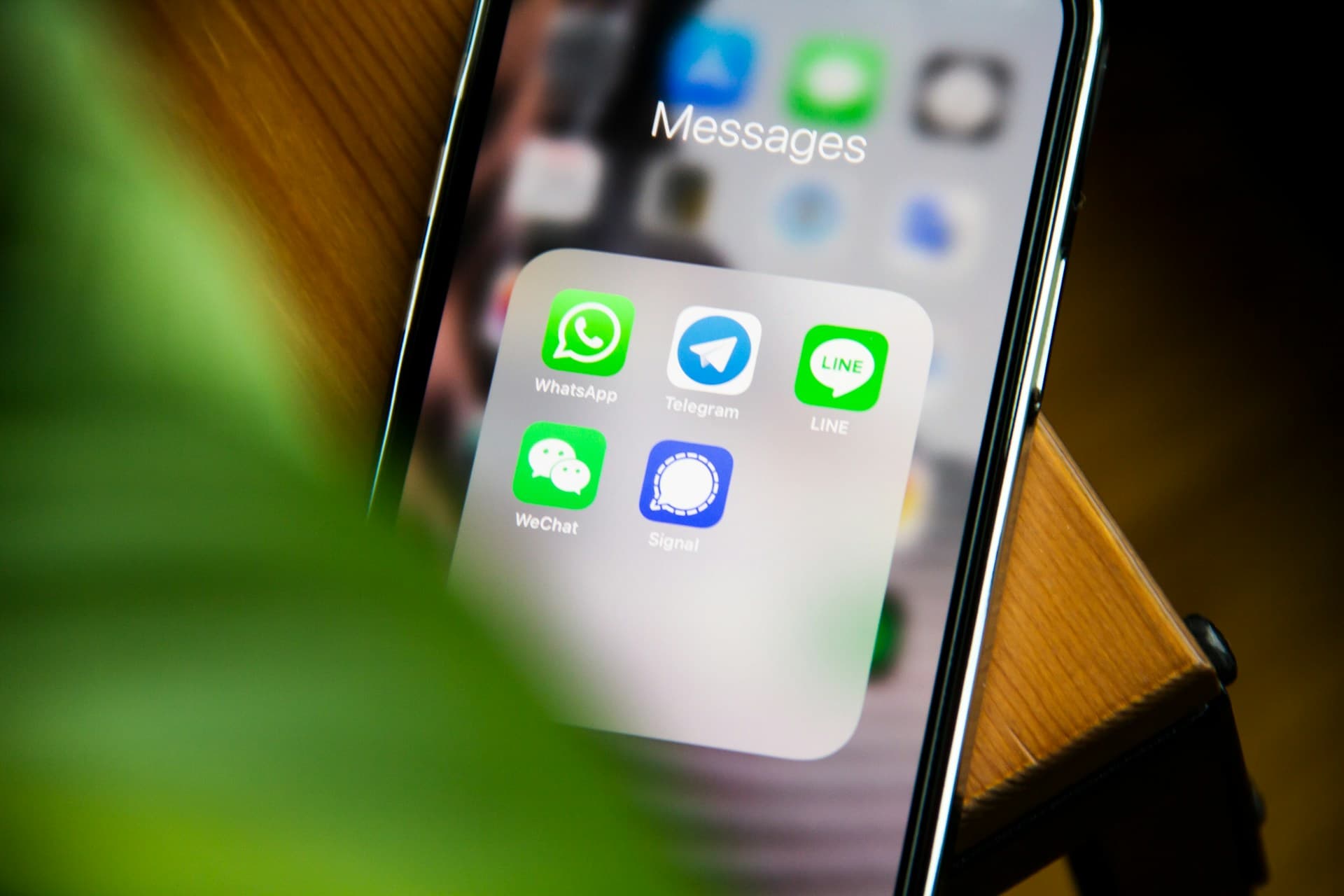
The fix is not to abandon the channels that work. Telegram works. WhatsApp works. iMessage, Signal, LinkedIn, X, and email all work, each for different people and different moments. The fix is to not be trapped on any one of them.
Resilience means a simple thing: if one channel goes dark, the relationship survives on the others. Concretely, that looks like —
- The relationship is the record, not the app. Contacts, history, and context live in a system you control, synced from the channels you connect — so no single app's outage erases them.
- Reach is diversified. You can move a conversation from Telegram to email to WhatsApp without losing the thread, because it was never anchored to one place.
- Your data is portable. You can get your relationships and their history out — because an asset you can't export is an asset you don't fully own.
That's the whole idea. Not "leave Telegram." Don't let leaving Telegram — or Telegram leaving you — be able to cost you the relationship.
What this means going forward
The point isn't to pick a winning channel; it's to make sure a single platform's bad day can't become your business's bad quarter. Keep the channels that work — Telegram, WhatsApp, iMessage, Signal, LinkedIn, X, email — and keep the relationship record somewhere you control, drawn from the channels you connect, so any one channel can wobble without taking the relationship with it.
That's the reason we build a multichannel CRM, and it's why we're willing to put our own one-in-seven number on the page: we're managing the same concentration risk we're describing, not lecturing from outside it.
Today was a reminder, not a catastrophe. The teams who'll be glad they noticed are the ones who treat it as a prompt to ask a plain question: if my primary channel disappeared tomorrow and didn't come back — the way it didn't in China — what would I still have?
Back up what matters — before the next takedown
You can't control Apple's App Store or Telegram's regulatory battles. You can control whether your relationships survive them. Pantheon is in alpha, and it's built for exactly this: your Telegram relationships kept safe alongside every other channel, so a takedown can't strand a decade of context. Join the alpha — we'll back up your Telegram for peace of mind, and you'll move up the waitlist. Be first.
FAQ
Is it safe to use Telegram for business? Yes — Telegram is a capable, widely used channel. The caution isn't about Telegram's safety; it's about concentration risk: relying on any single channel you don't control. Use Telegram, but don't let it be the only place your customer relationships exist.
What is platform risk? The risk that a platform you depend on — an app store, a messaging app, a social network — changes its rules, policies, or availability in a way you can't control and that damages your business. Today's Telegram removal is a live example.
How do I reduce platform risk for customer relationships? Keep the relationship record in a system you control, reach people across more than one channel, and make sure your data is exportable. A multichannel CRM does the first two by design.
Does going multichannel mean leaving Telegram? No. It means keeping Telegram and your other channels, with the relationship stored somewhere that outlives any one of them.
Milo
Expert in manufacturing technology and industrial solutions, sharing insights on the latest trends and best practices.
View all articles by Milo